Astronomy is an accessible and visual science, making it ideal
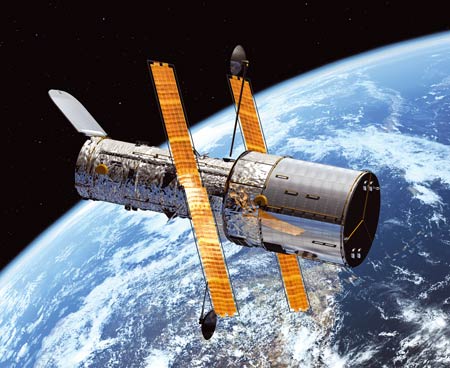
for educational purposes. Over the last few years the NASA/ESA
Hubble Space Telescope and the ESO telescopes at the La Silla and
Paranal Observatories in Chile have presented ever deeper and
more spectacular views of the Universe. However, Hubble and the
ESO telescopes have not just provided stunning new images, they
are also invaluable tools for astronomers. The telescopes have
excellent spatial/angular resolution (image sharpness) and allow
astronomers to peer further out into the Universe than ever before
and answer long-standing unsolved questions.
The analysis of such observations, while often highly sophisticated
in detail, is at times sufficiently simple in principle to give secondary-level
students the opportunity to repeat it for themselves.
This series of exercises has been produced by the European partner in the Hubble project, ESA (the European Space Agency), which has access to 15% of the observing time with Hubble, together with ESO (the European Southern Observatory).